Hey 👋
Smart Money Concepts sounds complicated, and the way most people teach it doesn't help. But strip the jargon and it's really a handful of simple ideas with fancy names. Here's the plain-English tour I wish I'd had when I started.
Market structure: BOS and CHoCH
Everything in SMC starts with structure, whether price is making higher highs or lower lows.
- Break of Structure (BOS) is when price takes out a recent high in an uptrend (or a recent low in a downtrend). It's the trend telling you it wants to keep going.
- Change of Character (CHoCH) is the opposite, the first time price breaks against the trend. It's the earliest hint momentum might be shifting. A handy way to remember it: CHoCH first, then a BOS the other way confirms the new direction.
Order blocks (and their cousins)
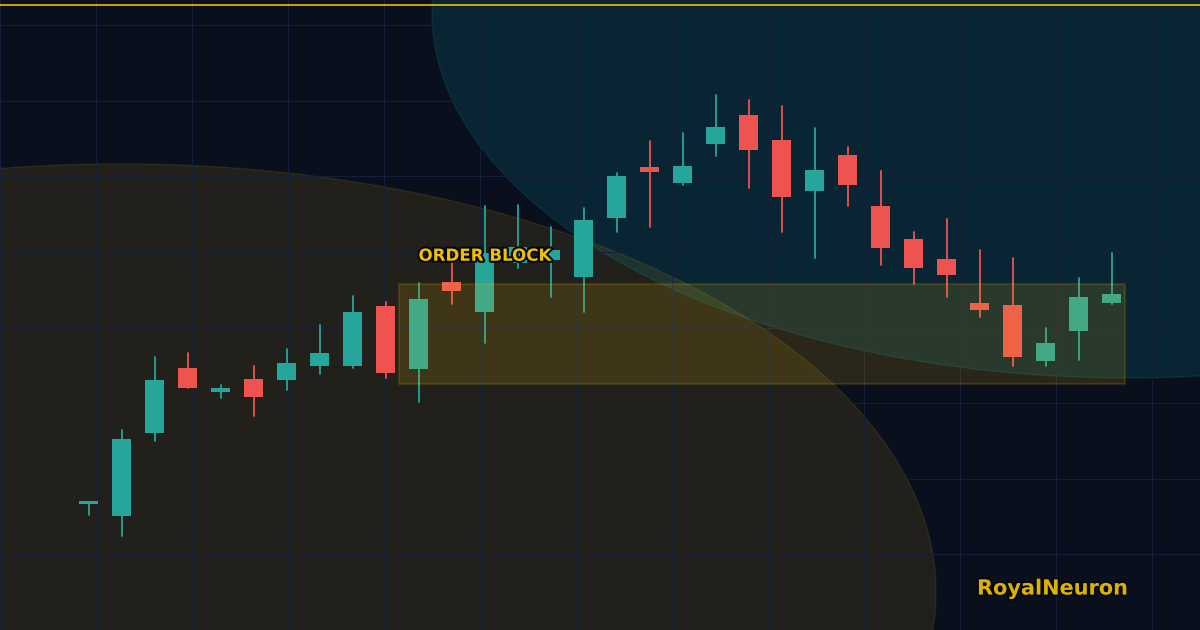
- An order block is the last opposing candle before a strong move, the spot where the big players loaded their orders. Price often comes back to it before continuing, so they're useful zones to watch.
- A mitigation block is the same idea, just the why: price returns to a block so institutions can rebalance an earlier position.
- A breaker block is a failed order block. When price breaks clean through one, that zone flips role, old support becomes resistance and vice versa.
Fair value gaps (FVG)
When price moves so fast it leaves a three-candle imbalance, that gap often gets revisited and filled later. Traders watch FVGs as pullback areas, places price might dip back into before carrying on. As always: wait for the candle to close before you trust it.
Liquidity: sweeps, equal highs/lows, inducement
This is the part that makes SMC click.
- A liquidity sweep (aka stop hunt) is when price pokes just past an obvious high or low to grab everyone's stops, then snaps back the other way. Obvious levels are targets, not walls.
- Equal highs / equal lows are matching tops or bottoms where stop orders stack up. That makes them a magnet, price often runs them before reversing.
- Inducement is the bait: an obvious high or low set to tempt traders in and build liquidity, right before the real move runs the other way. If a level looks too obvious, ask who it's for.
Premium vs discount
Dead simple. Take a range and split it at 50%. Above the midpoint is premium (where you'd look to sell), below it is discount (where you'd look to buy). Buy the low half, sell the high half.
Putting it together
You don't need all of this at once. Most of the time it's: read structure (BOS / CHoCH), mark the zone price reacted from (an order block or FVG), and watch how price behaves around obvious liquidity. None of it is a crystal ball, it's a framework for reading where price is likely to react, not a promise of what it'll do.
I'm building clean, non-repainting tools around these ideas. My scripts are free and open-source on TradingView, grab them here. Use them, break them, tell me what you'd change.
More SMC notes coming.
Cheers, RoyalNeuron 👑
Not financial advice. Educational only. Trading involves risk.